Friday, September 16, 2011

Johsel Namkung's Remarkable Nature Photographs

Josel Namkung with his 1981 photograph "Lake Juliuis, North Cascades"
The current exhibit at the Gordon Woodside / John Braseth Gallery in South Lake Union, titled "Masters Behind the Lens," features works by Ansel Adams and Johsel Namkung.

Adams is represented by a framed group of six familiar black and white prints, offered at $200,000. Far more interesting are the dozen or so vivid color prints by the 92-year-old photographer Johsel Namkung, selling for $5,500 apiece. It's as good a show as one can find outside a museum; in fact, the last time these photographs were exhibited was in 2006 at the Seattle Art Museum.

Namkung is a remarkable polymath. Born in Korea to a Chinese family that converted to Christianity, he studied music in Japan. In 1940, as an apiring opera singer, he took first prize in the All-Japan Music Contest. After the war, he and his wife, Mineko, moved to Seattle, where Johsel earned a master's degree in music at the University of Washington. Because he spoke several Asian languages fluently, he was then hired by Northwest Orient Airlines, but he soon discovered photography and embarked on a series of apprenticeships with the likes of George Tsutakawa, Paul Horiuchi, Mark Tobey and Ansel Adams himself. At one point in the 1950s, during the simmering conflict between North and South Korea, the Namkungs were declared enemy aliens and slated for deportation. Mineko, for a time, worked as a kimono-clad waitress at Canlis to help pay the family's legal bills.

To support his burgeoning career as an artist, Namkuing took a position as a scientific photographer with the UW School of Medicine. A friend gave him $500 to buy a Sinar 4 x 5-inch view camera and several lenses, which he used for his nature photography for the next three decades. In his book, "Ode to the Earth" (pbulished by Cosgrove Editions in 2006) Namkung describes "the loneliness and exultation" of reaching the top of the mountain, "standing all by yourself with your camera."

The actual printmaking is done by Namkung's longtime collaborator Dick Busher, who first scans the negative into a digital file. Namkung orchestrates the balance of colors (tone, hue and density), then Busher makes a proof using a highly calibrated Epson color printer fed by a 44-inch-wide roll of cotton-based, archival paper. The process uses eight inks and takes over two hours for each print.

The results are astonishingly textured, almost painterly images, from closeups of an icicle to a telephoto frame of heather on a mountainside. They make you gasp with wonder.

The exhibit runs through October 15th and is free. Woodside/Braseth, 2101 9th Ave., 206-622-7243, www.woodsidebrasethgallery.com. Open 11 am-6 pm Tuesday-Saturday.

Tuesday, August 2, 2011

A Lush Porgy and Bess at Seattle Opera

Jacob Gershovitz was born in Brooklyn at the end of the 19th century, the son of Russian Jews. Like Mozart, he died young; like Puccini, he wrote music that effortlessly assimilated the melodies and styles of other cultures. Like so many first-generation Americans, he was fiercely proud of the country his parents had adopted. (In that regard, he was rivaled only by Israel Isidore Baline, whom Gershovitz, by then known as George Gershwin, would call "the greatest songwriter who ever lived.") But unlike Irving Berlin, who worked alone, Gershwin was a musical collaborator when it came to songs. His older brother, Ira, wrote the lyrics for his songs and Broadway shows. The Gershwins' only opera, "Porgy and Bess," currently at Seattle Opera, was based on a play by DuBose and Dorothy Heyward.

Porgy and Bess.jpgThe story of a beggar and a floozy set in a tenement on the South Carolina coast, "Porgy" has been under fire since it was written 75 years ago, with leading African-American actors and singers complaining its use of Gullah dialect and (stereotypical) black low-life characters was racist. It has a mixed record as a novel, stage play, Broadway musical and Hollywood movie, but as an opera its power is undeniable. The score has bottomless chromatic depth and complexity; its best-known melodies come to life with an organic inevitability. To name but a few: Summertime, A Woman is a Sometime Thing, I Got Plenty o' Nothin, Bess You Is My Woman Now, It Ain't Necessarily So. Stereotypes? What did a Jewish piano player from Noo Yawk know about fishermen and cotton-pickers in the Deep South? What did a Frenchman know about gypsies in a Spanish cigarette factory, or an Italian about geishas in Japan? At least Gershwin spent a summer in South Carolina assimilating the humanity beyond the stereotypes.

There is no more anti-consumerist anthem than Porgy's "I Got Plenty o' Nuttin," as modern today as ever (with lyrics updated from the opera's Gullah dialect to slightly more standard English):

I got plenty of nothing
And nothing's plenty for me.
I got no car, got no mule, got no misery.

Folks with plenty of plenty, they got a lock on the door
Afraid somebody's gonna rob them...while they're out making more
What for?

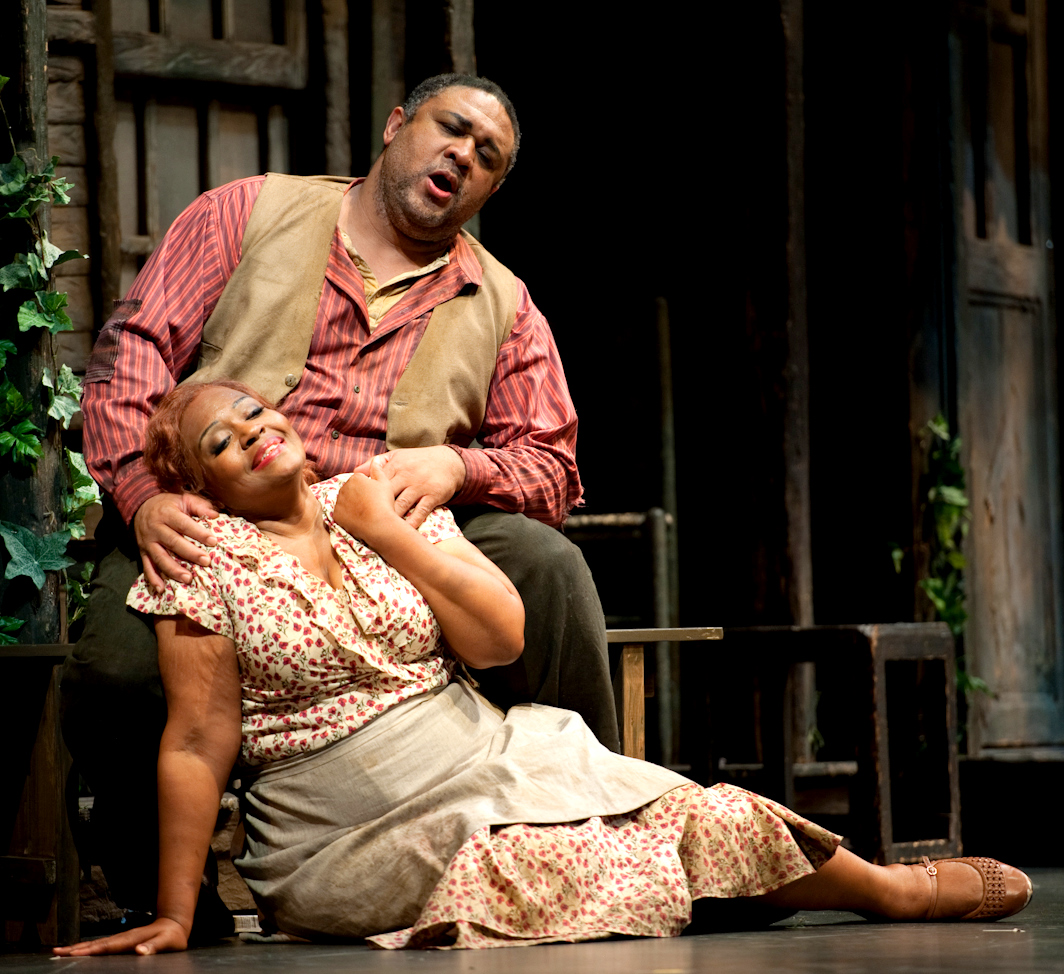
Above: Gordon Hawkins as Porgy, Lisa Daltirus as Bess. Seattle Opera photo by Elise Bakketun

This is not a condescending celebration of peasant simplicity (Marie Antoinette playing Farmville) but a ringing manifesto of minimalism. I only wish it had been delivered (by the estimable Gordon Hawkins) with more eloquence. It comes as an almost offhand soliloquy, the second number at the beginning of the second act. (Were "Porgy" a Broadway musical, it would be a first-act closer.) The poor, crippled beggar Porgy lurches across the stage on a crutch (not a goat cart), yet is never seen pleading for pennies, a man whose infirmities confer upon him not the nobility of the "noble savage" but a high ground of moral decency. Trouble is, in this production, Porgy himself doesn't command the stage; he's relegated to sideline benches while the colorfully costumed denizens of Catfish Row get good dance numbers, and the secondary roles are handled with a high level of expertise.

Mary Elizabeth Willians as Serena gives the Seattle audience the opera's best singing in her funeral lament for her husband, Robbins ("My Man's Gone Now"), murdered by Bess's no-good lover, Crown (well played by a very fit Michael Redding). It's a twist on "Old Man River" (from Showboat, 1925) that you might call Old Man River Sorrow.

Jermaine Smith makes Sportin Life a nasty snake with a redeeming smile; Gwendolyn Brown plays Mariah as Big Mamma, but in a good way; Angel Blue as Clara (who sings "Summertime" at the opening curtain) and Donovan Singletary as her huband Jake are particularly appealing young parents.

Porgy is an exhausting role, and Hawkins has been performing it for a quarter century. Ironically, he became an opera singer only after he washed out of professional baseball. A regular performer in Seattle for the past 20 years (Rigoletto, Macbeth, Tonio, Count di Luna, Gemont, etc.), Hawkins has 150 performances of Porgy on three continents under his belt, giving it everything he's got and often literally whispering his last lines (in "Lawd, I'm On My Way").

Seattle is fortunate that General Director Speight Jenkins's casting over his tenure has been resolutely color-blind. No local opera-goer bats an eye if Aida is black and Radames is white, if Macbeth is black and Lady Macbeth is white, it's all about the voices. But the license to stage Porgy and Bess comes with an inviolable condition from the Gershwin estate, which holds the copyright: all the singing parts, including the chorus, must be performed by artists of color.

Duke Ellington, who complained about "Gershwin's lampblack Negroisms" in 1935, reversed himself. "Your Porgy and Bess the superbest, singing the gonest, acting the craziest, Gershwin the greatest." he telegraphed the producer of the Broadway production.

In Seattle, a cast of African-American actors refused to perform the play during the Depression; it was envisioned as a Works Progress Administration production but was never performed. Grace Bumbry, who sang Bess at the Met in 1985, understood that the opera was more than a faded snapshot but a living piece of Americana. "Whether I sing it or not, it was still going to be there."

Gershwin himself called Porgy and Bess an American Folk Opera, yet its biggest successes have been outside the US, most notably a European tour by a South African company. "I think we've got a little jaded in the US with Porgy and Bess," Lisa Daltirus told The Times of London in 2009. But the argument over the opera's relevance is far from over. "A lot of people just think that this is a show that is lovely to listen to and happened way back when," Daltirus said. "They're not thinking that you can still find places where this is real."

Daltirus, whose steely Tosca at McCaw Hall in 2008 sent chills up my spine, has two lovely duets with Porgy but needs only four lines of Summertime (reprised in the opera's second half) to melt the hearts of the audience.

In the pit for this run is John DeMain, who has conducted more performances of Porgy than anyone alive. Far from running on auto-pilot, DeMain infused the opening night performance with verve and wit, from the overture's opening notes (a rocket that takes us to another world) to the rich, complex, hyperkinetic orchestrations that don't stop until Porgy hobbles off into the sunset, three and a half hours later.

Finally, the New York Times reports this weekend that there will be a new musical version of "Porgy and Bess" (a "commercial-minded reconception") opening on Broadway in December, starring Norm Lewis and Audra McDonald.

Seattle Opera presents "Porgy and Bess" through August 20 at McCaw Hall, 321 Mercer Street, Seattle. Tickets cost $25 to $241 and are available by phone (206-389-7676), at the box office (1020 John St., Seattle), or online

Monday, May 9, 2011

Magic Flute is a Highminded Fairy Tale

Magic Flute animals.jpg
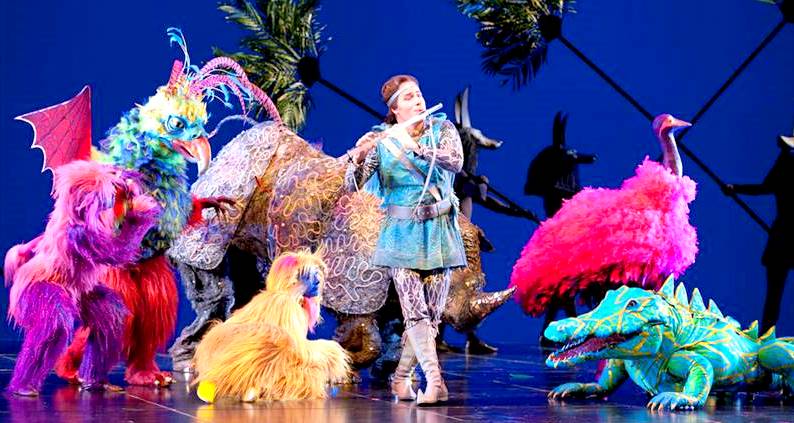
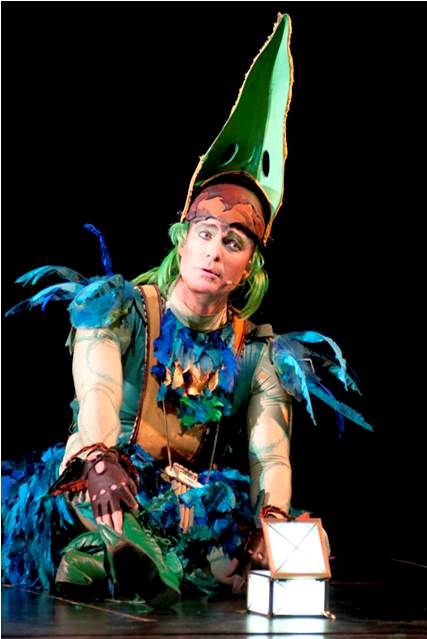
Tamino (John Tessier) entertains a menagerie with his magic flute. Seattle Opera photos © Rozarii Lynch

Mozart's final opera, "The Magic Flute," is both a fairy tale (supposedly for children) and a morality play (supposedly for grownups). In the current production at Seattle Opera, the better part by far is the fairy tale.

"The Magic Flute" is often described as an ideal "first opera" for newbies because some of its characters are goofy and childlike. But kids today, growing up with Big Bird, Elmo and Kermit, may not be impressed by a man in a bird suit playing a tune on the glockenspiel. It's the grownups who are, because the costumes are dazzling.

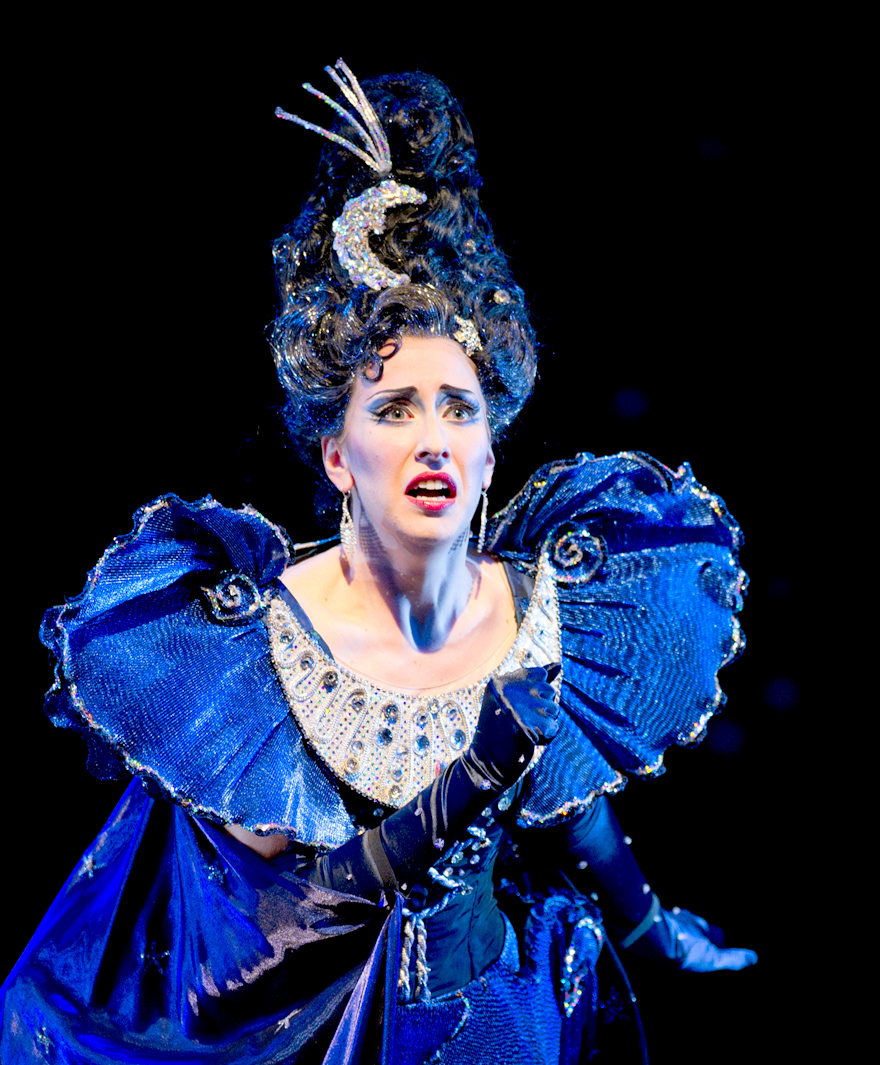
The British fashion designer Zandra Rhodes created them for a 2001 production by San Diego Opera, and updated them for the current Seattle version. The hero and heroine come off with the least interesting outfits (your basic light blue tunics), while the villains get deep purple tops and striped pantaloons. The stately good guys (and ladies) wear golden vestments that look like Flash Gordon firefighter slickers. Rhodes's cloak for the Queen of the Night is all dazzling blue and black and silver, while the three guiding spirits, in metallic, mid-thigh spandex, look like they're about to head onto the football field for Friday Night Lights. The most endearing are her costumes for Papageno and Papagena, who get to wear bird suits with beaks and tail feathers.

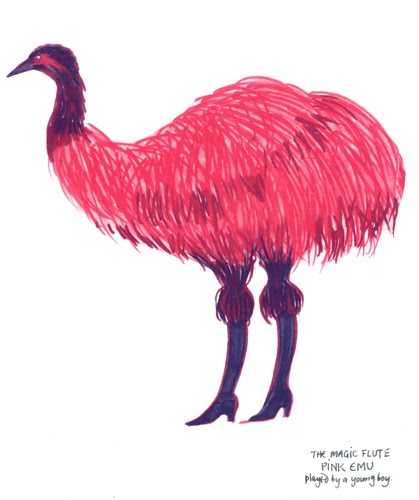
pink Emu.jpgAnd then there are the captivating animals: a fearsome Chinese dragon that wheezes its last within the first minute (it causes the hero to faint dead away before it's dispatched by the Ladies of the Night). A little later, though, a whole menagerie of beasts appears: a day-glo pink emu among an assortment of fantasmagorical birds, along with a crocodile, a rhino, and tumbling monkeys.

Queen-of-Night.jpgThe cuddly beasts make their appearance as Tamino blows a couple of test-toots on the magic flute he's been given by the maniulative Queen. Her role is sung, in the Gold cast, with great verve and clarity by coloratura soprano Emily Hindrichs, who has the vocal skills, if not the physical stature, of a menacing madwoman. On the other hand, the Russian bass (and former professional basketball player) Ilya Bannik towers over the cast as Sarastro, but doesn't have quite the resonance to be convincing as the voice of wisdom. It falls to baritone Philip Cutlip (Enrico in last year's "Lucia di Lammermoor") to provide the best singing of the night as the bird-catcher Papageno. It's the part the librettist, Emanuel Schikaneder, wrote for himself, and it's got the easiest music and the best bits of schtick as well.

Papageno.jpgFrom the pit, Gary Thor Wedow kept track of singers, players and technical effects ("Das Glockenspiel ist kaput!") with great musical aplomb, and for this production he inserted a few lines from a newly discovered libretto. But I was disappointed that one line, in particular, was excised. There's an exchange between Papageno and the wicked jailer, Monastatos, in Act One, when they first see one other, and each assumes the other is the devil incarnate. Papageno hasn't ever seen a black person, but soon reconsiders:
Es gibt ja schwarze Vögel in der Welt, warum denn nicht auch schwarze Menschen?
"There are black birds in the world, why shouldn't there be black people as well?"

It's a defining moment for the dim-witted birdcatcher, an important step in his own spiritual development. After all, why should Tamino and Sarastro get all the benefit from the Temple of Wisdom's (read "Masonic") humanism? ("In these hallowed halls, one forgives one's enemies.") Papageno, the opera's Everyman, deserves enlightenment as much as the vapid Tamino.

And vapid he is. Despite John Tessier's best vocal efforts, he's the weakest character onstage, out-acted by the baritone, outclassed by the bass, outsung by both Pamina and the vengeful Queen, and upstaged by the animals.

Sunday, February 20, 2011

A disappointing revival of Threepenny Opera

John Bogar w Allison Standley.jpg
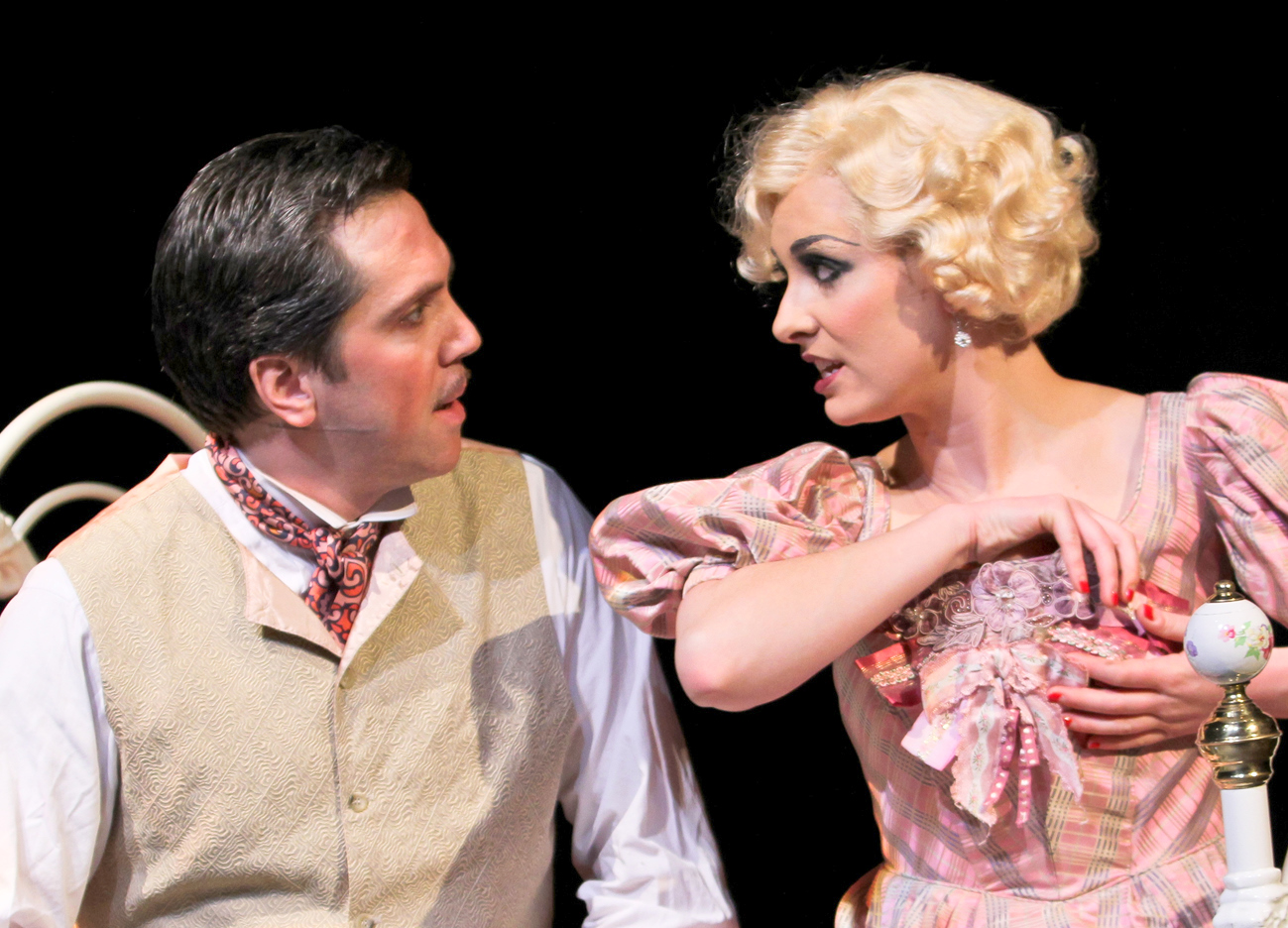
John Bogar as Macheath, Allison Standley as Polly Peachum. Photo by John Uhlman

Shakespeare had been dead for over a century when John Gay wrote "The Beggar's Opera" in the tradition of musical satires that skewered public corruption and hypocrisy to the melodies of Italian opera. Its plot may have been shop-worn even then, but the characters (Macheath, Polly Peachum, Tiger Brown) were fresh and immediately popular. Berthold Brecht picked up the notion at the end of Germany's dark decade after World War One, teaming up with composer Kurt Weill for an updated "Threepenny Opera," which the Seattle Shakespeare Company is presenting this season for the first time in 30 years.

The scene may be Elizabethan London but the real subject of Brecht's satire is the Weimar Republic. In the exceedingly bland version that Mark Blitzstein adapted for Off-Broadway in the early 1950s, it's familiar territory: a mashup of "Oliver's" lovable orphans and kindly Fagin, and "Cabaret's" cheerful Sally Bowles and suave emcee. But the gritty underworld described by Dickens wasn't a chirpy "It's a Hard-Knock Life;" Isherwood's menacing "Berlin Diaries" and "I Am A Camera" weren't about the harmless distractions of nightlife in Berlin.

It's the first time Seattle Shakespeare has mounted a production at Intiman, and the staging is rather austere, with more attention to faux-shabby costumes and lighting than expensive scenery. The cast--a dozen stalwarts of local theater, directed by Stephanie Shine--share a variety of roles (thieves, beggars, whores, police). John Bogar plays Macheath as an amiable cad, no more menacing than Rhett Butler's not giving a damn, no hint of his murderous doings. Russell Hodgkinson (the hapless George Aaronow in last season's "Glengarry Glen Ross") plays Peachum as a beleaguered small businessman; he's much better in drag as one of the girls in the brothel.

The worst offense of the Bltizstein adaptation is that it smooths the edges of Brecht's angry lyrics. One example: the heart of the text is in the third act's "Song of the Insufficiency of Human Struggling"
"Denn für dieses Leben / Ist der Mensch nicht schlecht genug / Drum ist all' sein Streben / Nur ein Selbstbetrug"

Literally, this translates as "For this life, man isn't nearly bad enough / All his striving is but self-deception." Blitzstein ignores this cynical view for a hokey dance number: "Useless, useless / Our kind of life's too tough / Useless, useless / Trying ain't enough."

We don't need a recycled staging of a play whose power, fourscore years ago, came from its language, from its startlingly original juxtaposition of words: "Soldaten wohnen / Auf den Kanonen" (literally, "Soldiers live on the cannons," not Blitzstein's light-hearted "Let's all go barmy / Live off the army" but Stan Ridgway's "The troops live under / the cannon's thunder").

Yes, you can fault Brecht for a nihilist sensibility and a didactic, Marxist approach to drama, but that was what his times called for. And you can recognize that Blitzstein's adaptation, too, was a product of its era.

But today? If you're going to resurrect a period piece (especially one that took its form from an earlier period piece), you don't need to sugar-coat it. We've sat through "Oliver!" and "Cabaret" and come out humming its cheerful tunes. The real meat of "Threepenny Opera" lies in its dark worldview, gloomy, pessimistic, cynical, bitter.

Although they were selling "Art Isn't Nice" tee shirts in the lobby and Shark Bite cocktails at the bar, mordant satire was not to be found onstage. Despite its pearly white smile, this Threepenny Opera remains toothless.

If you go: Seattle Shakespeare Company presents "The Threepenny Opera" at Intiman Theater, 201 Mercer St., Seattle, through March 6. Performance times: Thursday-Sunday at 7:30 p.m. with selected Saturday and Sunday matinees at 2. Tickets are $15-$40 for adults and $15-$25 for seniors and students. For reservations, call the Seattle Shakespeare Company box office at 206-733-8222 or go online, www.seattleshakespeare.org.

Monday, January 17, 2011

The Bachelor of Seville

Coburn w Brownlee.jpgOkay, last week we were fooling around in the lobby with The Barber of McCaw. This week it's time to get serious with a rollicking show that could be called "The Bachelor of Seville."

The more-than-suitable suitor is Count Almaviva. The rose? Technically, it doesn't show up until Rosenkavalier a full century later, where it's pure invention on the part of Richard Strauss. We have to make do, in Gioachino Rossini's hilarious opera, with the notion of a romantic serenade. The commedia dell'arte genre requires a collection of stock figures: a young hero, a beautiful heroine, an old meddler, a dashing soldier, and so on. Youth versus age, servants versus masters, women versus men. Rossini, not yet 24 when Barber premiered, was clearly on the side of the newcomers, the subjugated, the females.

Figaro, well, he's the barber at a time when barbers did a bit of everything, from shaves & haircuts to bloodletting to mailing letters. A Fixer, if you will, or, in the Seattle Opera staging of the piece, a combination reality show host, field producer and location manager.

And lest we forget, there's a hefty element of "American Idol" here as well. Each of the characters is called upon to sing an aria (or two) designed to showcase their best stuff. In the Saturday cast, Lawrence Brownlee blew the field away with a dazzling and rarely performed aria at the end of the opera, "Cessa di più resistere, Resistance is futile."

The two Rosinas, Sarah Coburn and Kate Lindsey, do their best as well with duelling versions of Una Voce Poco Fa, a sort of "Dear Diary" that starts with dreamy thoughts of the man behind the voice that has just serenaded her, then digresses into a headstrong "my guardian's not going to push me around" fantasy.

Every character lives in a fantasy, it turns out. Figaro thinks he's a sought-after big shot capable of fixing anything; Almaviva thinks he's irresistible (he serenades the audience, not his beloved); the doddering Bartolo thinks he's reasonable and charming; Basilio spins empty-headed evil plans of slander. Only the housemaid Berta knows the truth, that the cruel march of time is threatening to leave her an old maid. Sally Wolf, who sings this part, has the vocal chops to play leading roles; in fact, she's a semi-retired diva with a long list of starring credits. Far from being wasted in a minor role, she reminds us of what depth Seattle Opera has when it comes to casting its supporting singers.

Dean Williamson does double-duty in the pit, keeping up the frenetic orchestral pace and playing the fortepiano during the recitatives as well. Peter Kazaras had the pleasure of directing many of his former Young Artist Program performers and resisted the temptation to turn Barber into slapstick, with the notable exception of the first half closer. Seriously, colliding robots? Bachelor, I mean Barber, is plenty funny without another layer of artifice.

In the end, of course, love conquers all, Rosina graciously acccepts Almaviva's figurative rose, and even the bad guys are accorded a measure of respect. It's an opera without a mean bone in its body, The Barber of Civility, if you will.

Seattle Opera presents Gioachino Rossini's Barber of Seville, through Janusary 29 at McCaw Hall, 321 Mercer Street, Seattle. Tickets cost $25 to $208; during a Family Day matinee on Jan. 23, up to four $15 student tickets can be purchased with one full-price ticket. Tickets are available by phone (206-389-7676), at the box office (1020 John St., Seattle), or online.


Photo: Soprano Sarah Coburn with tenor Lawrence Brownlee, Seattle Opera photo © Rosarii Lynch

Saturday, December 18, 2010

La Scala: Opera Outside the Box

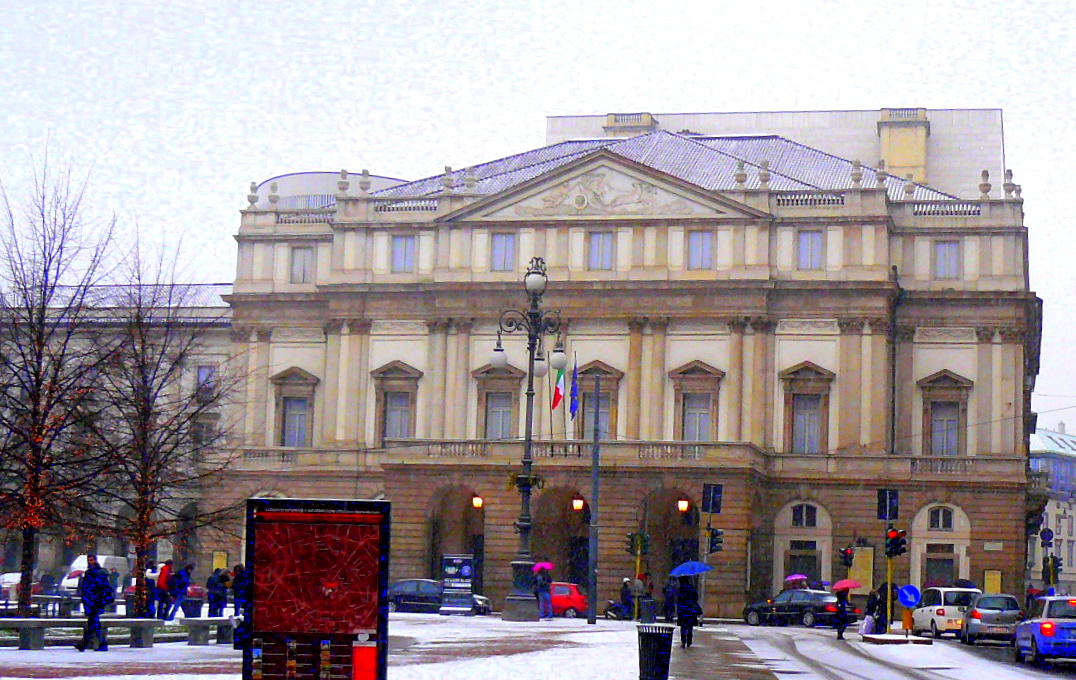
La Scala.JPG

MILAN--It may not be as grand, lavish and ornate as, say, the Opéra Garnier in Paris (built in the Napoleonic style 100 years later), but the Teatro alla Scala--after two years of technical remodeling and interior refurbishing--has returned to the summit of the world's great opera houses.

La Scala interior_tonemapped.jpg

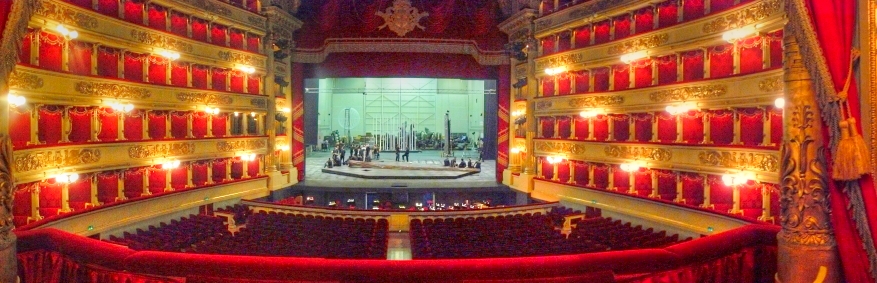
Built in 1778, La Scala today seats some 2,030 opera-goers, starting with rows and rows of burgundy-colored seats on the ground floor. A video display on the seatback shows the dialog, in the language of the singers and in a choice of Italian or English. You can see (in the bootlegged panorama taken surreptitiously from the Royal Box) that a giant black rectangle for supratitles, like the ones projected in Seattle and New York, simply would not work here. You can also see stagehands assembling the set for the current production of Wagner's Die Walkürie ; dem's da flying horses in the very back of the stage (almost 18,000 square feet of space, enough for three or four complete sets; traps to a depth of 60 feet, flies to a height of 120 feet).

Then four levels of plush red boxes, 36 on each level. At the center, the boxes seat six; as they get closer to the stage (with poorer views), five seats, then four. The boxes were once owned by local families who even had private kitchens in the arrière-loge , but today the seats are sold individually, top price (240 euros, $350!!) for the front spots, less for the back. At the top of the house, two levels of "galleries," supposedly standing room, with the last 140 second-row seats going on sale nightly for 10 euros. (See Cornichon's previous entry, Postcard from Milan for details.) They're standing-room seats if you want to see anything; there's actually a chair if all you want to do is listen.

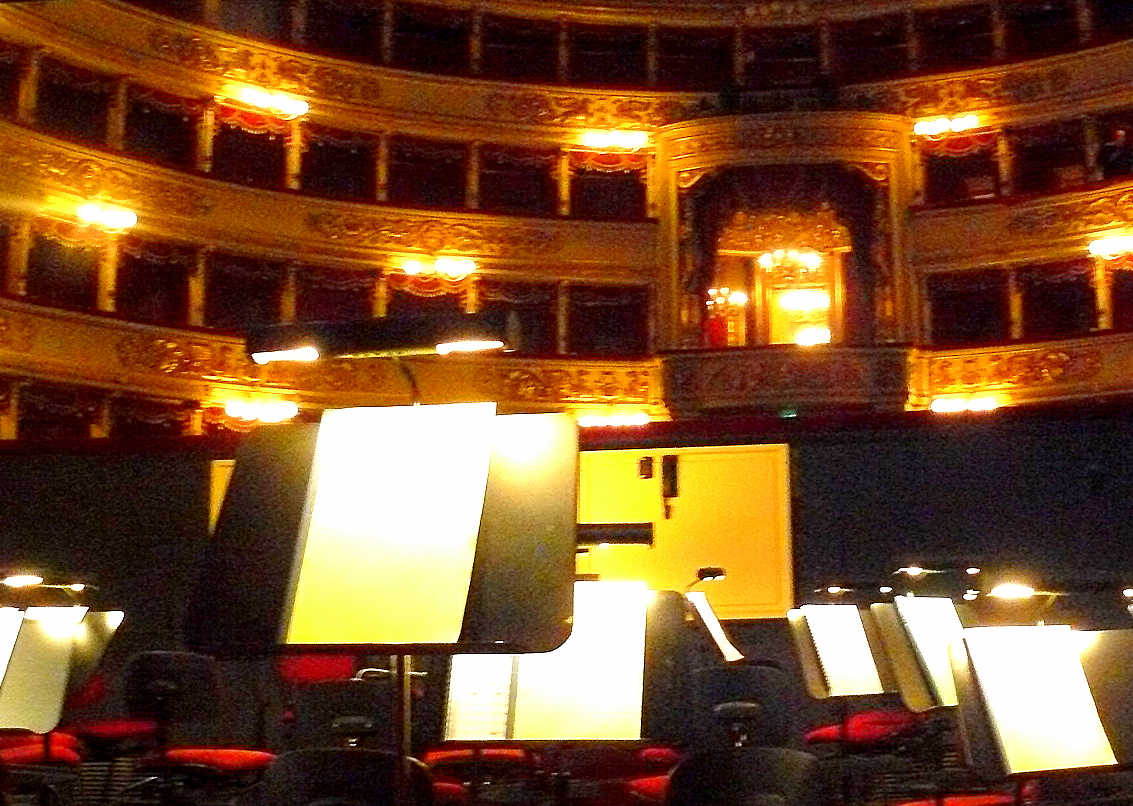
La Scala orchestra pit.JPGAnd what do you hear? The best acoustics imaginable and the largest orchestra pit in Europe, 25 feet deep, with a pine floor that maximizes the sound of 110 musicians. (A great view of the Royal Box, too, if you're not concentrating on the conductor or your score.) Singers have to project over that abyss; it's no wonder that it's virtually impossible to sing at La Scala for one's entire career. And the standees, the reguars who hang out in the gallery, they know what's what. They hooted Roberto Alagna off the stage one night, propelling his understudy, Antonello Palombi, into the production of Aida wearing street clothes. (There's a Seattle connection, by the way. Palombi arrived at McCaw Hall a few weeks later to sing the lead in Pagliacci; Cornichon's reviews are here and here.)

The new La Scala is so technically proficient that it is able to present over 270 performances a year, 70 percent more than before the remodeling project. That's good news to opera lovers here (and La Scala has its share of locals who attend virtually every performance). It's also good news to the administration, which needs those box office receipts. Attendance is strong, running at well over 90 percent capacity. Altogether, an enviable position for an opera house.that's been around for 200 years.

One last note: La Scala was the first public building in Europe to be illuminated by electricity. Today, the chandelier alone has nearly 400 bulbs; the monthly electric bill is close to $200,000.

Sunday, October 17, 2010

Lucia's Bright, Shining Madness

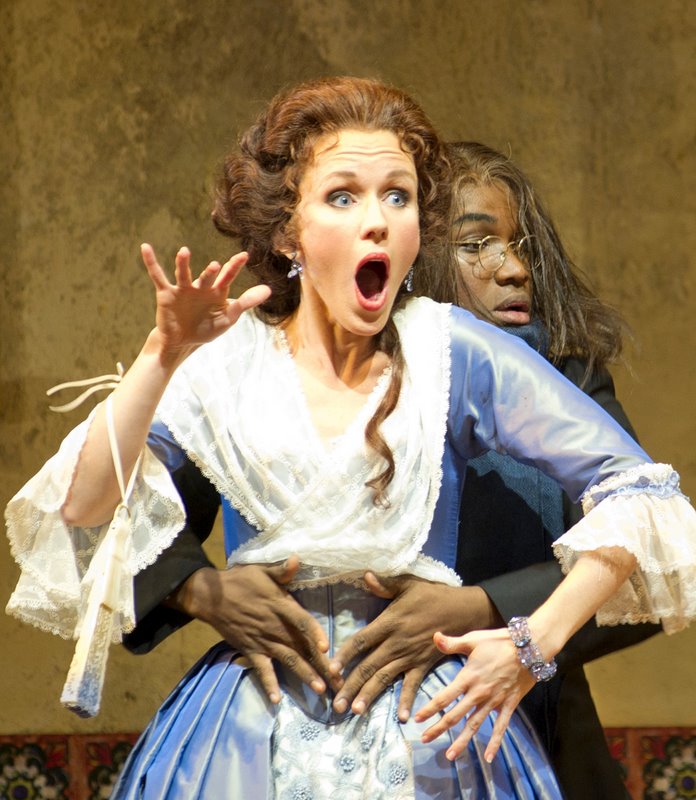
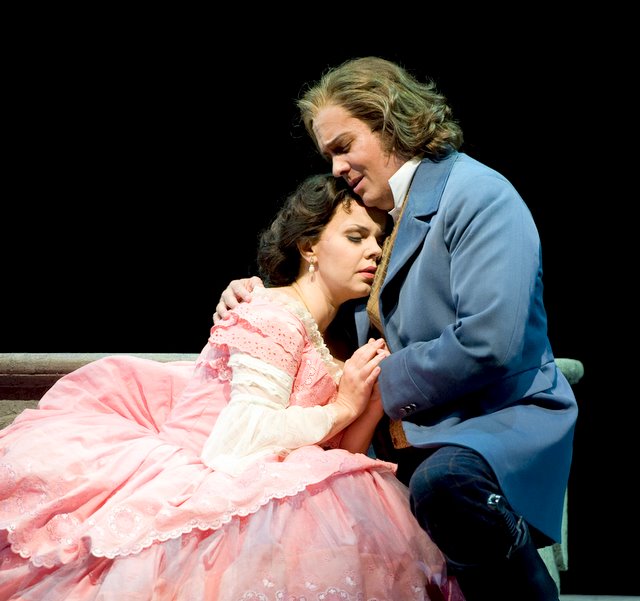
Lucia w Edgardo.jpgThe first of several heart-stopping moments in Seattle Opera's dazzling new production of Gaetano Donizetti's Lucia di Lammermoor comes in the first act. Lucia, sung with crystalline brilliance by the Polish soprano Aleksandra Kurzak, entwines her limbs with Edgardo's (tenor William Burden) as they pledge eternal love. In the audience, you can't help but fall in love with the singers, even though you know there's trouble ahead, big trouble.

Meanwhile, the music keeps on coming. When Lucia premiered in 1835, Donizetti was the king of Italian opera composers, with Rossini retired, Bellini dead, and Verdi still on the horizon. For continental audiences of the 19th century, the Scotland of Sir Walter Scott's romantic novels was a wild and woolly emotional frontier of stormy landscapes dotted with rugged cliffside castles and populated by endlessly warring clans. (For all that, the setting of this Lucia is more Italian hill-town than craggy Lammermuir.) In the second act, there's a brilliant sextet in which the principle characters express their individual perspectives on the action (joy, despair, trepidation, excitement, etc.) in what's become an operatic clické, but here it's staged with such musical conviction that you realize "Aha! This is where those silly parodies (Bugs Bunny, Three Stooges), originate! Now they make sense!"

Then, in the third act, comes the hair-curling mad scene, which could be nothing but coloratura flash. With the right performers (Maria Callas, Dame Joan Sutherland), it becomes a gut-wrenching tour de force. (The opening night performance was dedicated to Sutherland's memory.) Kurzak is technically perfect and emotionally convincing.

The Seattle Opera chorus periodically fills Robert Dahlstrom's multi-tiered set with lavish costumes (by Deborah Trout) and rousing voices (prepared by Beth Kirchhoff). In the pit, the Neapolitan conductor Bruno Cinquegrani, a Donizetti specialist, leads the orchestra with assurance and verve.

It's the fourth time now that McCaw audiences have heard Burden: shipwrecked in Iphigenia auf Tauris, shirtless in Pearl Fishers, in dress whites as Amelia's father, and now as a love-struck Scotsman. He becomes more assured and muically confident with each appearance. If he kept his mind on his mission (avenging his family, murdered by Lucia's older brother) there'd be no opera. If Lucia refused hers (to marry her brother's benefactor), there'd be no opera. Instead, Lucia kills her husband,goes mad and kills herself. Burden has the unenviable task of following one of the most famous scenes in opera with an anguished aria of his own; he pulls it off with aplomb.

Kurzak, an immensely talented and accomplished lyric soprano whose roles to date have stopped just short of madness, sings her first Lucia. She's entirely credible as a teenage Lucia (clowning around a fountain) who quickly gets in over her head as a pawn in story's medieval Scottish politics. She lands the thrilling high notes but she's almost too cute for her hysteria to be absorbed as tragedy. Genuine madness, you think, requires greater maturity, greater sense of loss than teenage poutiness:
Act One: @LuciaLamm Edgardo the coolest, love forever, but bro disapproves
Act Two: @LuciaLamm Marry to save famiily, WTF? Arturo better not eff w me
Act Three: @LuciaLamm OMG stabbed Arturo blood everywhere. Losing it

And yet, and yet. What makes Lucia such a pleasure is the seamless collaboration of international talents (Polish, Croatian, Italian, Israeli, Spanish, to name just the froeign-born artists) in the service of music written close to 200 years ago, music that gives a depth of meaning to a timeless story, performed by singers who give it emotional depth.

Sopranos (and the occasional mezzo) go mad with frightening regularity in opera; on this same stage we've heard Elvira in I Puritani, the title character in Amelia, Lady Macbeth in Macbeth (more histrionics), and Azucena in Il Trovatore

So when Kurzak's Lucia descends the staircase of the Piranesi-inspired set clutching the bloody veil of her wedding gown, she's no longer a little girl overwhelmed by family politics, she's no longer a "canary" but a woman with spectacular vocal gifts. Her madness, transcending demented confusion, becomes an expression of victory, of moral clarity.
Un armonia celeste, di, non ascolti?
That celestial harmony, don't you hear it?

What we learn from Lucia is an all-too-familiar lesson: sanity is no substitute for honesty, madness no impediment to truth.

Seattle Opera presents Lucia di Lammermoor at McCaw Hall through Oct. 30th. Tickets $25 to $191. Reservations online or by calling 206-389-7676.

Seattle Opera photos © Rosarii Lynch