Sunday, May 5, 2013

Cafe Nordo takes on the Old West

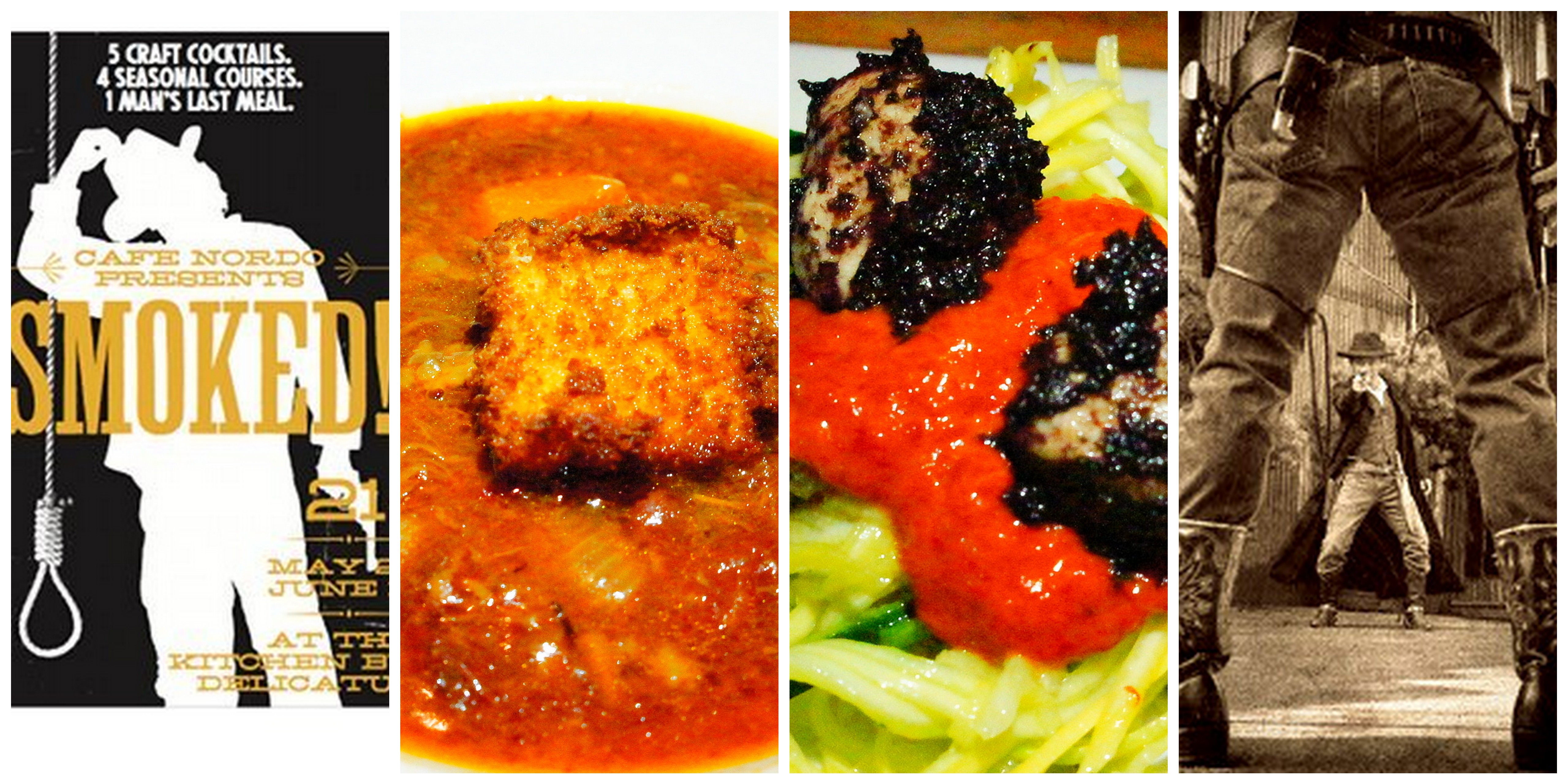
Cafe Nordo Smoked.jpg
Terry Podgorski & Erin Brindley

Restaurants fall into broad categories, but once you get past the stuff-your-face-quickly places, they all have an element of the theatrical. What could be more dramatic, for example, than the simultaneous raising of the cloches in a Michelin-star fine-dining palace, revealing in one stunning moment the dishes of every guest at the table? Café Nordo, Seattle's homegrown enfant terrible of dinner theater, will have none of that artifice, thank you, but that doesn't mean they're averse to serving a meal whose entertainment value laces honest food and stiff drunks with a message of political satire.

Nordo's current production, "Smoked," is a tribute to the American Western, epitomized by "Gunsmoke," the long-running (9 years on radio, 20 seasons on TV) series that came to define the entire genre of Western soap opera with its stoic lawman, its bawdy saloonkeeper, its mysterious stranger.

 As it happens, Marshall Matt Dillon's namesake, Seattle chef Matt Dillon, has just opened a restaurant, Bar Sajor, a block from the Pioneer Square space where "Smoked" is playing. But you won't be deprived at "Smoked." There's a four-course menu, expertly prepared by Nordo's director and co-producer, Erin Brindley in a real restaurant kitchen ("The Kitchen at Delicatus," an offshoot of the Delicatus deli two blocks away). True to the "spaghetti western" theme, the fare is politically correct "Molecular Chuck Wagon" (shredded zucchini "spaghetti" with mozzarella "meatballs", a delicious oxtail chili, a rhubarb pandowdy).

The evening also includes five cocktails (a sparkling Campari aperitif, a gin martini, a whiskey sour, a Toronto, etc.).

In fact, sustainable food is a recurring theme in the Nordo shows, with regular jabs at fast food and Monsanto-style engineered ingredients. The published manifesto begins thus: "In Café Nordo's pursuit of unadulterated digestions, theatrical cuisine combats the theology of blandness that permeates our culture," which can be read as an overly earnest proclamation or as self-protective satire, or both at once.

 Café Nordo productions typically rely on American sterotypes like TV shows, airplanes, chickens, and the circus. Terry Podgorski, who writes the shows, uses iconic subjects so that his cast of semi-professionals don't waste time setting up the stock characters; the audience already knows them. In the most recent show, the Twin Peaks parody "Somethin' Burning," Podgorski even killed off company's namesake, the mythical martinet Chef Nordo Lefesczki, so you have to wonder whether the conceit wasn't wearing a bit thin after all these years. But no, the show retains its charm and homespun lack of pretense.

Composer and keyboard artist Annastasia Workman leads a band of musicians in original music that ably channels the tone of Ennio Moricone's spaghetti westerns (more archetypes!) The trumpeter, Evan Mosher, doubles as one of the patrons of the saloon, who gather to await the hanging of a local kid who had the audacity to set fire to a field of wheat, an act of eco-terrorism punishable by death. "Hanging brings people together," one of the characters says, menacingly. (You can almost predict that the next song would be titled "A Noose of One's Own.")

"Ninety proof self-pity," says Opal Peachey, who plays saloonkeeper Clara Still. As Cornichon has written before, Brindley and Podgorski nuzzle right up to the line of self-parody but don't cross it. Most of the company have been together since the original Circus Contraption days, and have worked together on the Café Nordo concept for years. The "Smoked" saloon set takes up half the intimate space, with the band tucked up in the balcony, so there's room for just over 50 patrons a night.

But for the first time, there's also a real kitchen, so the food's as good as the drinks. It's dinner theater, not Shakespeare, after all, meant to be savored and enjoyed. A few drinks, a few laughs, you could do a lot worse in Pioneer Square these days.

Café Nordo presents "Smoked," at The Kitchen by Delicatus, 309 First Ave. S., Seattle. Performances Thursday, Friday & Saturday through June 6th. Must be over 21 to attend. Tickets start at $60 ($5 additional on weekends, $10 more for the cocktail flight) via Brown Paper Tickets.

Monday, February 25, 2013

This old coat

Mimi languishes with Rodolfo at her bedside; Musetta waltzes; Colline bids his coat goodbye. Photos: Elise Bakketun

The music and plot of Puccini's La Bohème are so familiar that it's a little like going to Disneyland with your friends from summer camp. You practically want to hum "It's a Sad World After All."

So the challenge, in Seattle Opera's production, is to offset the on-stage misery; the young artists (writers, painters, singers) may be starving and freezing, but they're determined to get through yet another discontented winter. Spoiler alert: the sweet-natured seamstress Mimi--sung by soprano Elizabeth Caballero--doesn't make it to April, despite her friends' frantic, last-minute efforts. The stalwart Arthur Woodley even sells his beloved overcoat to buy medicine, to no avail.

The story of these passionate scamps isn't all about heartbreak, though. Paris in the 1890s was plenty raucous, full of bright colors and brazen sexuality, captured in director Tomer Zvulun's fresh staging (the sets came from St. Louis, the costumes were dusted off from Seattle Opera's 2006 Bohème). The courtesan Musetta, especially--soprano Norah Amselem--revels in being surrounded by a "scent of desire" in her delightful aria, "Quando m'en vo" (which also provided the tune for Della Reese's biggest hit, "Don't You Know," in 1959).

A good thing that the audience knows what's coming. This Bohème doesn't slow down to showcase the opera's big numbers; instead, it showers the audience with musical exclamation points and dramatic sparkles from beginning to end, posting Instagram pix of the Bohemians on the curtain and tweeting hashtag #allaboutmimi. 

Seattle Opera's General Director, Speight Jenkins, is retiring after three decades at the helm of an organization that has seen both lean and happy years. With a surefire winner like La Bohème, a full slate of ten performances performed by two casts, happy times. Especially with a $15 family matinee on March 10th.

This summer, a new Ring cycle will bring Wagner fans from around the world to Seattle. By then, the trustees will have selected Jenkins's successor, but there's not enough money left for his going-away party. Plans for a new production of Meistersinger have been scrapped, and upcoming seasons will be cut back from five to four productions.

One could ask whether there's a future for regional opera companies at all, given that New York's Metropolitan Opera now broadcasts every one of its operas, live-in-HD, into movie theaters around the country. But that really would be a sad, sad world.

A street photographer captures the Bohemian friends at a Paris café on Christmas Eve

Seattle Opera presents Puccini's La Bohème, through March 10th at McCaw Hall. Tickets online (at www.seattleopera.org) and at the box office, 321 Mercer St., 206-389-7676. 


Monday, January 14, 2013

Seattle's Cinderella season lives on

You won't see this Cinderella story at the Clink (you wouldn't have, even if the Hawks had made it past the Falcons), but Seattle Opera is staging La Cenerentola, Gioacchino Rossinni's delightful retelling of the Cinderella story, this month at McCaw, complete with wacky costumes, wicked stepsisters and half a dozen supportive rats.

The bright and lively production is a travelling road show, originally built for Houston but "owned" by no fewer than four opera international companies. It's almost like watching a fill-in-the-singers cartoon, with a cast of relatively inexpensive rising stars plugged into the principal roles. As a result, the production values often outshine the voices.

Most fun are the six "rats" with shiny noses and long, languid tails. performed by a nest of locally recruited dancers under the direction of a Spanish actor and choreographer, Xevi Dorca.

A young Italian maestro, Giacomo Sagripanti, was responsible for the music's sprightly pace, which I wish had been even sprightlier, especially in the languid first act. That said, Sunday's Karin Mushegain as Cinderella embodied an appropriately modest and reticent "Venus of the Ashes" right up to her triumphant declaration, "Non più mesta," ("No more housework!") she proclaims, only to be undone by the production's twist: it was all in her head.

If the melody of Non più mesta sounds familiar, it well should: it's a transposition for soprano of "Cessa di più resistere" from Barber of Seville (performed here quite stunningly two seasons ago by Lawrence Brownlee). What a scamp, that Rossini, stealing his own music! What a thieving magpie!

Seattle Opera presents La Cenerentola, through January 26th at McCaw Hall. Tickets online (at www.seattleopera.org) and at the box office, 321 Mercer St., 206-389-7676.

Seattle Opera photo by Elise Bakketun

Sunday, October 14, 2012

Free the prisoners!

Seattle Opera photo by Elise Bakketun

Beethoven's lone opera, Fidelio, returns to the Seattle Opera stage just in time for election season.

The contemporary staging emphasizes the modern-day relevance of this two-century-old story. After all, what could be more touching than the heroic story of a political prisoner and the loyal wife who comes to his rescue?

"I didn't plan it to happen in the election season," general director Speight Jenkins told a radio audience on KING FM, "but it's certainly not inappropriate to produce an opera about freedom from oppression during the political season."

The values behind Beethoven's rousing music--personal freedom, individual initiative, --resound with half the political spectrum. But then there's that chorus of prisoners, the 47 percent, opposed to the tyranny of the rich, who haven't lost faith that justice will be done, and whose liberation in the final scene is the purest expression of hope and joy in opera.

There's a tired, long-suffering bureaucrat, the jail-keeper Rocco; an ambitious, morally reprehensible jailer, Don Pizarro; an innocent prisoner, Floristan; and his spunky savior, Leonora, who disguises herself as a man (Fidelio) so she can gain access to the prison.

It was guest conductor who made the call to begin with the so-called Leonora III overture, which emphasizes the haunting, haunted melodies of a prisoner, rather than the one Beethoven himself decided on (the Leonora IV, or actual Fidelio overture). Dragged on forever in melancholy, it seemed, followed eventually by Beethoven's trademark resoluteness.

 Christine Libor, a radiant German soprano, portrays Leonore. So convincing is her disguise that the jailor's daughter falls in love with her assumed persona. Rescue Floristan she does, of course, and justice triumphs. The prisoners are freed, the bad guy is led away, and the chorus (under guest chorusmaster John Keene) chants righteously that love conquers all.

Beethoven is the master of the uplifting chorale, the closing chorus of the Ninth Symphony, set to Schiller's lyric "Ode to Joy" being unequalled, but the prisoners' joyful "Heil sei dem Tag" (Praised be this day) in the second act of Fidelio sure comes close.

"It's like going to church," bass Greer Grimsley told an interviewer. You don't know whether to stand and applaud or kneel and pray.


Seattle Opera presents Fidelio, through October 27th at McCaw Hall. Tickets $25 to $225, online at www.seattleopera.org or by phone at 206.389.7676 or 800.426.1619.

Tuesday, October 9, 2012

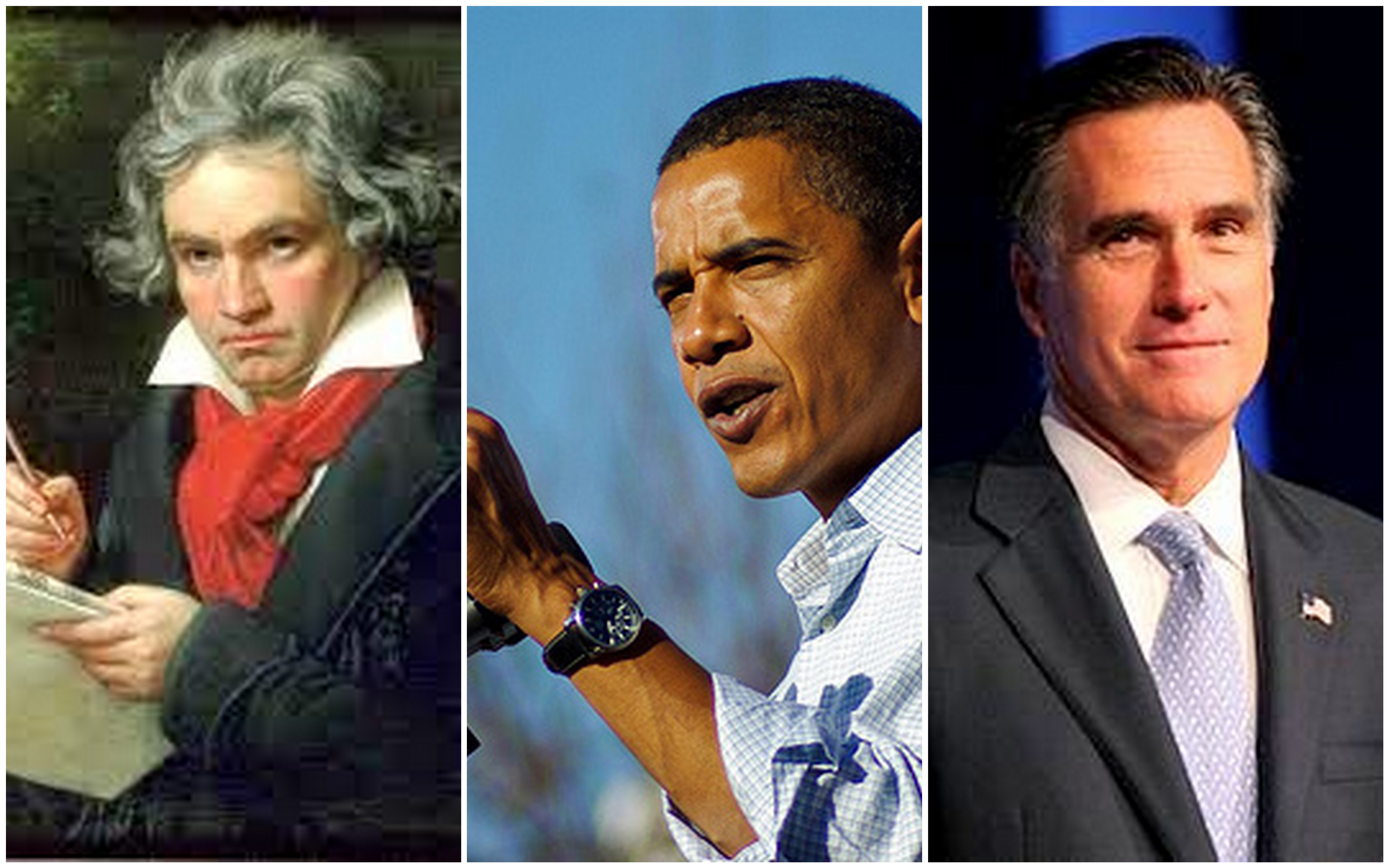
Ludwig, Barack & Willard walk into an opera house

Desktop1.jpg Seattle Opera rolls out Beethoven's lone opera, Fidelio, once every decade or so, most often in a contemporary staging that emphasizes the modern-day relevance of this two-century-old story. After all, what could be more touching than the heroic story of a political prisoner and the loyal wife who comes to his rescue?

"I didn't plan it to happen in the election season," general director Speight Jenkins told a radio audience on KING FM this weekend, "but it's certainly not inappropriate to produce an opera about freedom from oppression during the political season."

The values behind Beethoven's rousing music--personal freedom, individual initiative, --resound with half the political spectrum. But then there's that chorus of prisoners, the 47 percent, opposed to the tyranny of the rich, who haven't lost faith that justice will be done, and whose liberation in the final scene is the purest expression of hope and joy in opera.

There's a neutral, long-suffering bureaucrat, the jail-keeper Rocco; an ambitious, morally reprehensible jailer, Don Pizarro; an untarnished nobleman, Don Fernando; an innocent prisoner, Floristan; and his spunky savior, Leonora, who disguises herself as a man (Fidelio) so she can gain access to the prison.

The challenge faced by Seattle Opera is to take a story in what's become an elitist art form (but which, in its day, was even more populist and culturally relevant than rock concerts) and reconnect it with the local audience. Hence this project, last month, for a commnity sing-along of the Prisoners Chorus.

Seattle Opera presents Fidelio, October 13-27 at McCaw Hall. Tickets $25 to $225, online at www.seattleopera.org or by phone at 206.389.7676 or 800.426.1619.

Tuesday, July 31, 2012

Silent but Mighty: Movies at Paramount


Sitting at the organ console below the screen at the Paramount Theater is Jim Riggs, a mild-mannered Midwestern music teacher whose calling is to accompany silent film screenings across the country. His favorite instruments are the enormous organs built by Wurlitzer in the heyday of silent movies, 80-plus years ago, invariably referred to as "Mighty Wurlitzers." (There's a local non-profit devoted to the restoration of the Wurlitzer in Seattle.) Riggs improvises melodies as he watches the on-screen action, accenting the visuals with warbles, trills, clangs, and sighs. Last night it was Cecil B. DeMille's 1927 epic "King of Kings," which mixed interludes of reverence (it's Jesus, after all) and villainy (the money changers), grandeur (the Temple) and playfulness (goats, children). DeMille's casting included an Austrian matinee idol named Joseph Schildkraut as the turncoat Judas Iscariot (I couldn't help flashing forward by three decades to Schildkraut's turn as Anne Frank's father); cowboy star H.B. Warner plays an exceedingly well-coiffed Jesus. 

All this was the final installment in the 2012 season of Trader Joe's "Silent Movie Mondays," which resume next May. Seattle, says organist Riggs, is a great silent movie town.

Wednesday, June 13, 2012

More Cafe Nordo? Yes, Please!

Cafe Nordo, the imaginative, even zany pop-up restaurant and dinner theater, has extended its current run of "Cabinet of Curiosities" through June 23rd. It's a look at the history of food, with an emphasis on poisonous mushrooms, immortal vegetables, and mysterious soups.

Under the aegis of the imaginary "Chef Nordo Lefesczki" patrons are served three appetizer courses in lavishly decorated rooms of Capitol Hill's venerable Washington Hall, (a French Salon, a cave of Invasive vegetables, a magician's parlor) before the main banquet is served. Lefesczki himself remains aloof, but is represented by his creative alter egos, the impresarios Erin Brindley and Terry Podgorski, along with an able staff of guides and actors (who double as waiters),

The four-hour, five-course performance is filling and satisfying, both gastronomically (Painted Hills filet, Wilson Fish king salmon) and artistically, Details at www.cafenordo.com; reservations via Brown Paper Tickets

Podgorski, a Circus Contraption alumnus, tells Cornichon that the next Cafe Nordo, this fall, will be at a venue in the International District. "We're not like Teatro Zinzanni, with a permanent location, because that would spoil the secret, the exclusivity. We do two shows a year with a capacity of maybe 1,200 people. You have to be in the know."

Friday, May 11, 2012

Butterfly's tragic tale of trust & betrayal

Seattle Opera photo by Elise Bakketun
The story is straightforward, as grand opera plots go: a naval officer deceives a poor young girl and pretend-marries her, gets her pregnant and leaves town. When she learns, three years later, that he has for-real married someone else, she turns the child over to his new wife and kills herself.

In Madama Butterfly, currently playing at Seattle Opera, this age-old tale of wayward love, of trust and betrayal, is set in Japan (a new and exotic land to early 20th century Europeans), but Puccini's music and the Giacosa-Illica libretto were written for Italian ears: over two hours of nonstop, romantic arias, duets and interludes swirling inexorably toward the Butterfly's inevitable, tragic ending.

The term "cad" may be old-fashioned, but Butterfly's lover, Lieutenant Benjamin Franklin Pinkerton, is nothing less. Though he woos her well, in a magnificent love duet that ends Act One, he never considers her more than a plaything. Much is made of his "America Forever" sense of entitlement to "pluck the flowers on every shore" he visits. The US Consul, Sharpless, warns him about not to break Butterfly's "trusting heart," but Pinkerton has convinced himself that in Japan, "everything is flexible," even a marriage contract.

Poor Butterfly. When she enters with her bridal party, luminous beneath a golden parasol, she is "the happiest girl in Japan." She gives herself completely to Pinkerton, even though she's promptly renounced by her family. At the beginning of Act Two, abandoned for three years, she still waits for Pinkerton's ship to return. And here, at Madama Butterfly's midpoint, comes "Un Bel Di," the opera's most famous aria, the heroine's gut-wrenching resolve to tough it out, come what may. Alas, as we know all to well, It's all downhill from there.

When Pinkerton does return, he can't even face Butterfly. Too late, he realizes what a shit he's been. Too late, Butterfly acknowledges she's been deceived. "I knew it would end like this," clucks the Consul. (Last year, an American professor wrote a book, "Butterfly's Child"--renamed Benji-- that imagines the youngster growing up \on a farm in the Midwest after Pinkerton retires.) Stefano Secco, the tenor from Milan who sings Pinkerton in this production, says he knows he's done a good job when he gets booed at the curtain call.

But in the end, it's all about the soprano who sings Butterfly. Patricia Racette owns the role, taking us from a giddy teenager thrilled to be marrying an American in a Navy uniform to the sadder but wiser single mom who chooses suicide over dishonor. Racette has lived in Japan and knows firsthand the gestures and movements of a geisha; she has sung Butterfly almost 100 times, most recently at the Met in New York. Vocally, the part demands everything, while physically the Japanese geisha gestures must be precise. If there's an emotion to be manipulated, Racette knows how to wring the heartstrings.

The story, in fact, was originally adapted for the Broadway stage by the American playwright David Belasco; Puccini saw a production in London in 1900 and--though he understood not one word of English--was moved to tears. And, sure, there's a certain irony that in Seattle the American naval officer is sung by an Italian, the American consul by a Canadian, the two Japanese women by Americans, all led by a Bulgarian conductor. If you stood around until the world produced a perfect Japanese Butterfly, you'd still be waiting for the downbeat.

On the HD simulcast at Key Arena on opening night, it was a bit of a surprise to see beer vendors in the aisles before the music started, although there was no intrusive "Getcher programs, getcher peanuts, getcher sooshee!" thank goodness.Instead, the jaw-dropping immediacy of the performace itself. I found that the closeups of the singers made the story seem even more tragic, but my own sense of awe and terror wasn't readily shared. (That essay is here.) Onstage at McCaw, there seemed to be much greater warmth in the audience toward the performers, a greater connection with the artists, and a growing sense of excitement and foreboding that exploded in well-deserved applause at the final curtain.

Seattle Opera presents Madama Butterfly, at McCaw Hall. Performances May 11, 12, 16 & 19 at 7:30 PM; May 13 & 20 at 2 PM. Tickets from ($25 to $244) online at www.SeattleOpera.org, or by calling the box office (206-389-7676) during business hours.

Above: Patricia Racette as Butterfly, Sefano Secco as Pinkerton.

Tuesday, May 8, 2012

Opera in HD: Ready for her closeup

Patricia Racette as Cio-Cio-San on the HD screen at Key Arena

 It's not the fervid excitement that used to precede a Sonics game at Key Arena, with vendors in the aisles: "Getcher programs, getcher co' beer, getcher sooshee!" (Not really, but you get the idea). Instead, there's a tranquil anticipation leading up to the first-ever simulcast of a local opera production.

No matter that it's actually happening, live, at McCaw Hall, barely 300 yards away, the premiere of Seattle Opera's Madama Butterfly. The HD screen at one end of the Key is enormous, 50 by 80 feet, dwarfing the evening's live presenters. Previews play: interviews with designers and directors. And, just like the movies, there's a cartoon, the iconic "What's Opera, Doc?" parody of classical Wagner stagings. Then Speight Jenkins steps to the microphone at McCaw and onto the screen, ten times larger than life, to say a few words of welcome.

"Lights!!" someone shouts from the balcony, where spotlights are still glaring. As conductor Julian Kovatchev mounts the podium (in a view from the orchestra pit that non-musicians will never see), the shouting becomes a chant, "Turn down the lights! Turn down the lights!" Just in time, the house lights dim, and the maestro gives the downbeat.

Movie directors have known for decades that closeups do wonders for drawing people into a story. ("We didn't need dialogue; we had faces.") and Madama Butterfly's Patricia Racette spends the next three hours reconfirming her status as the queen of opera in HD opera: She doesn't need to say it: she is big. It's the pictures that got small.

With remarkably few glitches (a split-screen effect in Act III that failed due to a wayward camera), the simulcast was better than the best seat I've ever had at McCaw. No opera glasses needed.

Director in control room.jpg
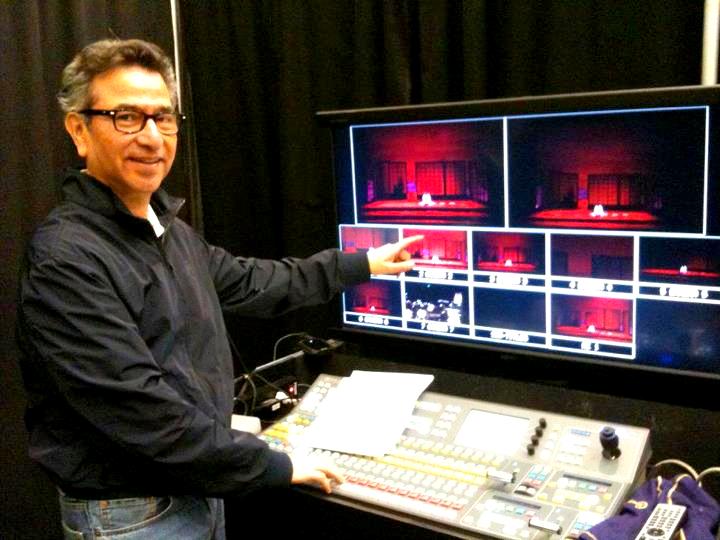
Frank Zamora at the HD console
Video director Frank Zamcona (known for the San Francisco Opera's successful "Opera at the Ballpark" series) uses his seven HD cameras to propel the story in ways that you can't see no matter where you sit, where you view the full stage no matter what. In Act I, for example, the camera catches Suzuki overhearing Pinkerton tell Sharpless that he's looking forward to the day he'll marry a "real American wife." No way that a Japanese servant girl like Suzuki could actually understand a word of English, but the cutaway (and Suzuki's arched eyebrow) tells the audience that she's already wary of Pinkerton.

The music continues without interruption. There are no recitatives, no spoken dialogue; everything is sung with dramatic immediacy. We see every twitch in Butterfly's composure. Patricia Racette isn't playing a part or singing a role, she's inhabiting her character with such conviction that we forget we're watching a performance. Even though the story is familiar, the outcome known to every opera-goer, we live Butterfly's anguish, and at the climax, when Butterfly surrenders her child and kills herself, thousands of sports fan gasped in horror.

At McCaw, as Racette took her bows, the audience was on its feet (you could hear them cheering wildly), yet the Key was muted, the crowd strangely silent. Applause, yes, but polite. Almost no one standing. Not because they weren't thrilled, in my view, but because they were numb. It's thrilling to see and hear opera live, and we've been conditioned to respond with applause and calls of bravo at live performances. The hybrid HD experience overwhelms our senses and seems to call for a new set of responses. When we were kids at the matinee, we'd cheer for the cavalry. HD is a different sort of adventure but we should allow ourselves to become kids again and cheer like crazy.

Frank Zamora photo by Jonathan Dean, Seattle Opera

(UPDATE of sorts: this isn't just a Seattle issue; according to the NY Times, it's an HD problem.

Tuesday, April 3, 2012

River Lost, River Found


Blaine Harden, who grew up in central Washington while his father worked on mammoth construction projects, became a foreign correspondent for the Washington Post in eastern Europe, sub-Saharan Africa and northeast Asia. Back in Seattle, he's been a busy contributor to the New York Times, the Economist and public television. This week he's in the news for a harrowing book about North Korea's brutal prison system, "Escape from Camp 14.

By coincidence, an earlier book of Harden's has just been re-released in time for a documentary in the PBS "American Experience" series. The TV show is called "Grand Coulee Dam," to be broadcast tonight, April 3rd, at 8 PM; it's based on Harden's book, "A River Lost: the Life and Death of the Columbia."

Originally published 16 years ago, "A River Lost" recounts the construction of the Grand Coulee Dam in the 1930s, and can be read either as a compelling account of human enterprise and ingenuity (the taming of a natural resource to create cheap electric power) or a morality tale of human arrogance (the destruction of a great river for private profit).  Harden's father helped build the dam, helped bring irrigation to the parched desert, helped raise the standard of living of thousands of farm families, helped produce aluminum for wartime airplanes and power for the Hanford Nuclear Reservation. But by the time Harden returned home, after 20 years of overseas assignments, Grand Coulee was increasingly seen as having killed the mighty river, destroying its salmon runs and trampeling the treaty rights of Native tribes. The Columbia itself, once a majestic and mighty waterway, had been reduced to plumbing.

In a review of the book in the summer of 1996, the New York Times called "A River Lost" "...a scathing indictment of technocratic hubris, and of those who play what Mr. Harden calls 'the river game' for shortsighted economic gain."

No need to worry about salmon runs; Grand Coulee didn't have any fish ladders, and the dam pre-dated the Endangered Species Act at any rate. Native tribes? Piffle. With casual racism, the manager of one of the irrigation districts blames the river's condition on the impoverished Indians for overfishing.

Into this arena of passionate but mismatched interests steps an old-fashioned lawman, Federal Judge James A. Redden. From his courtroom in Portland, the 81-year-old Redden rules in favor of the voiceless fish and the disenfrachised Natives. Taken aback, the Establishment digs its heels and virtually refuses to comply. Not just the Bush White House, either. The Obama Administration has been every bit as protective of irrigation districts and power companies. Still, some accommodations have been made, with encouraging consequences:

Spillways on the Columbia's dams have allowed more fish to migrate. At Judge Redden's insistence scientists, rather than power managers, have gained the ability to influence the operation of the river. The Bonneville Power Administration and the US Corps of Engineers are now required to reduce power generation and spill a lot more water (and baby salmon) over the dams. The results are heartening: unexpectedly good survival rates for salmon migration.

(For a look at the complexity of managing the river's flow, see this piece in Forbes.)

"When I reported on the river in the early 1990s, no one knew or dared predict that spill would prove so useful [to survival of the salmon]," Harden wrote to me in an email last week.

As a result, Harden says, "Indians up and down the Columbia-Snake are in a much better place. They may be able to hang on to the traditional culture and food. That is a great and noble thing for our government and civil society to do -- and I didn't believe it was possible when the book [first] came out."

The irony is that the West Side environmentalists have joined the biggest users of the Columbia's power: Google, Amazon and Microsoft have built power-hungry server farms in eastern Washington and Oregon, giving "nearly everyone on Earth who sends e-mail, uses a smartphone or streams video a personal stake in the damming of the Columbia."

But hydro has found new, unexpected alliances with solar, wind power and natural gas. Coal-power electricity is likely to be phased out in this part of the country, which is good for the planet. Altogether, Harden says, it is a far happier story than the prison camps of North Korea.

A River Lost, The Life and Death of the Columbia, by Blaine Harden. W.W. Norton, 288 pages, $15.95